Thursday, December 21, 2006

Quote

"When one tugs at a single thing in nature, he finds it attached to the rest of the world." John Muir

Sunday, December 17, 2006

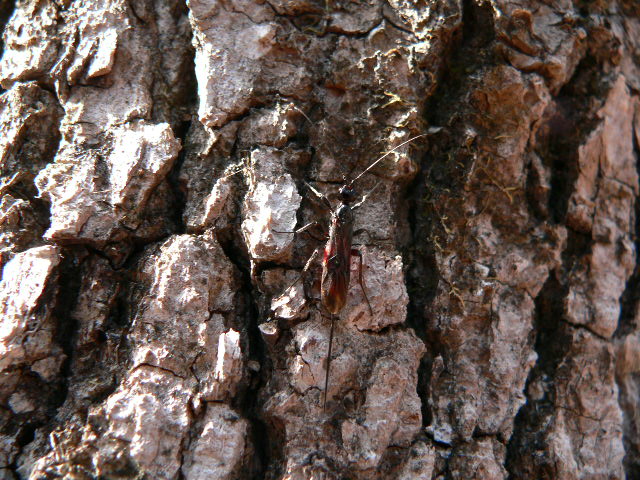
Braconid Wasp


I came across an odd looking wasp that I had never seen before. After doing a little research I found that it's a specie of Braconid wasp. What was interesting about it was the long "stinger" looking projection off the end of its abdomen. This "stinger" is actually not a stinger at all, but an ovipositer, which by the way are only found on females. The female searches out a suitable host, usually caterpillars by feeling with her long antenna. Once a host is found she uses her ovipositer to literally inject her eggs into it. As the larvae develop they feed on the host and eventually eat their way out. Once outside they spin themselves into a silky cocoon, which by the way stays attached to the outside of the caterpillar until it emerges as a wasp. These along with other parasitic wasps are beneficial and are a natural means of controlling pests such as aphids and tomato hornworms, the caterpillar of the tomato hornworm moth. Click on the photo for a closer view.

Labels: , , , , , ,

Friday, December 15, 2006

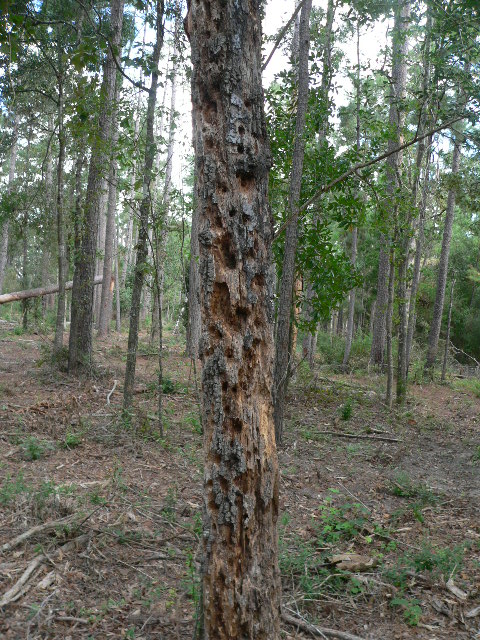
Importance of Snags


Snags are an essential part of wildlife habitat. When coming upon an old snag most would think of it as nothing more than a, well a rotting piece of wood, worthless and in need of removal. How wrong they would be. These "rotting pieces of wood" play an integral part in maintaining a forest's health. They are beneficial to about every life form that thrives there, be it birds, insects, mammals, reptiles, amphibians, fungi, lichen, and even minute bacteria serving as food, shelter, perches, cover and nesting sites. Snags are formed by several different means- lightning, disease, fire, drought, and normal aging. It is routine practice by forest managers to leave a certain amount of snags per acre due to their impotance to the forest ecosystem. They will eventually fall where they will continue to support life and add important nutrients to the ground that will benefit other plants.

Labels: ,

Web Counter
Online Schools