Floating Acorns

Not many people realize what may lurk inside a simple acorn. I can remember collecting acorns as a kid and stashing them away in a jar to later find a mass of tiny squirming larva. Do all acorns have residents? How could you tell which do and which don’t? I read an article about a study that used the “float method” to determine whether or not the acorns of the red oak were either diseased or infested with weevil larvae. They did this by dropping a handful of acorns into a bucket of water- the ones that sunk were viable, but the ones that floated were found to either have some form of disease or insect infestation. I decided to put the float method to the test.

I grabbed a handful of acorns from beneath a water oak that resides on our property and dropped them into a bucket of water. Most sunk, but there were those that floated, which I removed for dissection. The fact that the nut meat of an acorn is denser than water causes a healthy acorn to sink. Ones that float have had its weight or density reduced by way of the nut meat being eaten by insect larva (and replaced with air and frass), reduced by acorn rot caused by pathogenic fungi and bacteria or after being aborted before the acorn was fully developed (when oak trees are under periods of stress they’ll abort or drop the acorns before they’re fully developed in order to conserve nutrients and water).

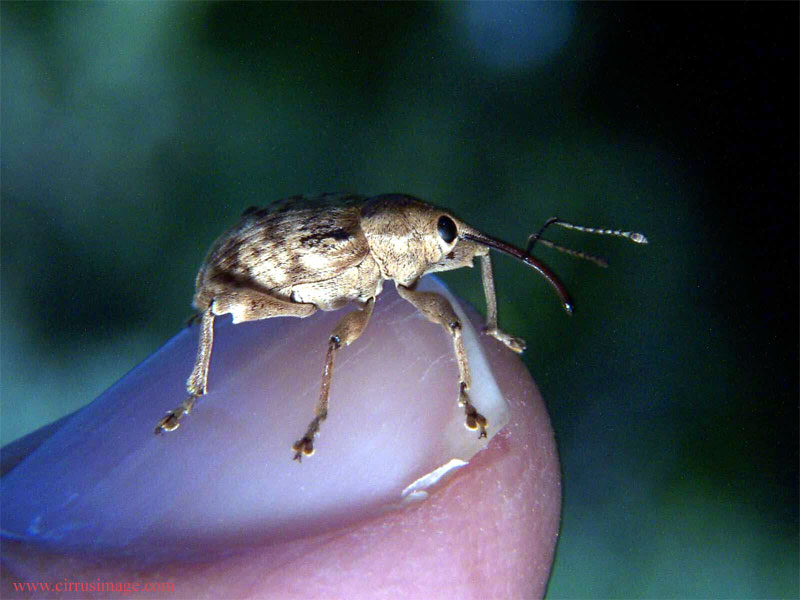
I cut into the first acorn to find that the meat had dark areas possibly caused by some sort of disease agent, probably a fungus. The next several opened contained the larva of an acorn weevil (Curculio spp.). Female long-snouted weevils bore into the shells of developing acorns using their snout which have small saw-like teeth that work much like a hole saw. Eggs are then deposited via an ovipositor located on her abdomen, which soon develop into larva that feed on the nut’s meat inside. A few weeks later the larva chew their way out of the acorn (which has fallen to the ground)and burrow into the soil where they pupate emerging as adults the next year.

Sources:
Labels: acorns, float method, long-snouted weevil, weevil larva
posted by Jace Stansbury at 8:00 PM
4 comments